Self Service Ice Vending Machine: Benefits, Features, and Business Opportunities
A self service ice vending machine offers a convenient way to provide fresh ice to customers whenever they need it. As demand for accessible ice continues to grow among households, outdoor enthusiasts, food vendors, and businesses, these automated machines are becoming an attractive option for entrepreneurs looking for practical business opportunities. With features designed to simplify purchasing, improve accessibility, and support efficient daily operations, self-service ice vending can serve a wide variety of customer needs while offering opportunities for long-term growth.
The appeal of this business model lies in its simplicity. Customers can purchase ice without waiting for staff assistance, while operators can manage many routine activities through automated equipment. Whether placed near residential communities, recreational areas, convenience stops, or commercial districts, a well-positioned machine can provide a useful service throughout the year. Understanding its benefits, essential features, and business potential can help prospective owners decide whether this opportunity fits their goals.
For entrepreneurs exploring reliable equipment options, self service ice vending machine solutions from ChinaPukui offer a starting point for understanding automated ice vending systems and the possibilities they bring to modern ice distribution. By examining how these machines work and what makes them valuable, business owners can make informed decisions about equipment selection, location planning, and customer service.
1. Understanding Self Service Ice Vending Machines
A self-service ice vending machine is an automated system that allows customers to purchase ice with minimal or no direct assistance from an operator. Depending on the equipment configuration, a machine may produce ice on-site, store it in a sanitary environment, and dispense the required quantity after payment. Other systems may focus on storing and dispensing ice supplied separately. This flexibility allows businesses to consider different operational arrangements based on their available space, electricity supply, customer demand, and investment budget.
One of the most appealing characteristics of this equipment is its ability to simplify an everyday purchase. Customers who need ice for beverages, camping trips, fishing, food preservation, or outdoor events can access it without entering a traditional retail store. Automated dispensing also helps create a consistent purchasing experience, reducing the need for employees to handle every transaction individually.
The equipment may include digital controls, payment interfaces, dispensing mechanisms, temperature management systems, and monitoring features. The exact configuration depends on the model, so buyers should carefully compare specifications before choosing a machine. Understanding the distinction between ice production, storage capacity, and dispensing capacity is especially important because these factors directly influence how effectively a machine can serve its intended market.
2. Key Benefits of Self Service Ice Vending Machines
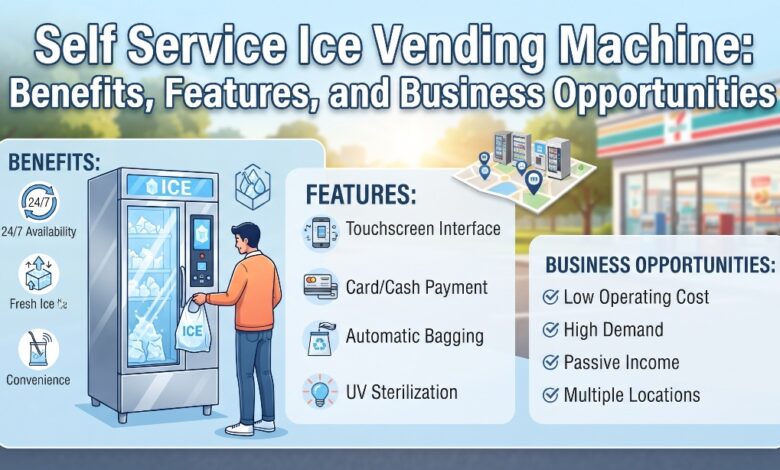
Self-service ice vending offers several potential advantages for entrepreneurs seeking an automated retail business. Although actual results depend on location, operating expenses, and demand, the model can provide a convenient service while reducing some of the labor associated with conventional sales.
- Convenient customer access: Customers can purchase ice quickly without relying on an employee to retrieve and package every order.
- Flexible operating hours: Equipment designed for extended operation can serve customers outside conventional business hours, provided the location and local regulations permit it.
- Reduced routine labor: Automated payments and dispensing can reduce repetitive tasks, allowing operators to concentrate on maintenance, cleaning, and business development.
- Consistent purchasing experience: A well-maintained machine can offer predictable quantities, straightforward transactions, and dependable service.
- Multiple customer groups: Households, restaurants, mobile food vendors, campers, and recreational users may all need ice for different purposes.
These benefits are particularly attractive when a machine is installed in an accessible location with sufficient demand. However, automation does not eliminate operating responsibilities. Owners still need to monitor cleanliness, inspect equipment, replenish supplies when necessary, manage payment systems, and respond to technical issues. Evaluating these responsibilities realistically helps establish a sustainable business model rather than relying on the assumption that automated equipment requires no attention.
3. Essential Features to Look For
Selecting suitable equipment begins with identifying the features that matter most to the intended customers and operating environment. Production capacity is an important consideration because a machine must produce or hold enough ice to meet demand during busy periods. A unit that is too small may struggle during hot weather or holidays, while an oversized system can create unnecessary upfront and operating expenses.
Hygienic ice handling should be a priority. Since ice is commonly used in beverages and food preservation, the machine should be designed with appropriate food-contact materials, accessible cleaning points, protected storage, and effective drainage. Buyers should also investigate applicable sanitation requirements and the maintenance procedures recommended for the equipment.
Payment flexibility is another valuable feature. Depending on the market, customers may prefer cashless payments, contactless transactions, cards, or other locally supported payment methods. A clear interface and simple dispensing process can reduce confusion and make the machine easier to use for first-time customers.
Additional features may include temperature monitoring, fault alerts, remote operating information, durable exterior construction, energy-efficient components, and safeguards against unauthorized access. Not every business needs every feature, so the most sensible approach is to prioritize functions that solve real operational problems. Comparing equipment specifications, warranty coverage, service availability, and replacement-part access can help owners select a machine that supports dependable operation over time.
4. Business Opportunities Across Different Markets
A self-service ice vending operation can serve several market segments, making location selection an important part of the business strategy. Residential neighborhoods may generate demand from families hosting gatherings, organizing celebrations, or needing additional ice during warm weather. In these areas, convenient access and clear pricing can make the service appealing to customers who do not want to travel far for a simple purchase.
Recreational locations offer another possibility. Camping areas, fishing destinations, marinas, picnic grounds, and outdoor activity centers may attract customers who need ice to keep drinks cold or preserve food during trips. Demand in these locations can vary with weather, weekends, and seasonal activity, so operators should evaluate both peak periods and quieter months before investing.
Commercial districts can also present opportunities. Food vendors, small catering businesses, event organizers, and hospitality operators may require regular ice supplies. A conveniently located vending machine can provide an additional purchasing option for customers who need ice outside their normal supply schedule.
Potential markets include:
- Residential communities and neighborhood retail areas.
- Recreational facilities and outdoor destinations.
- Fishing, boating, and camping locations.
- Areas near food businesses and event venues.
- Travel routes where motorists can stop safely and conveniently.
Each market has different requirements. A location with heavy traffic may still perform poorly if customers cannot stop safely, while a smaller site may succeed if it serves a reliable group of repeat customers. Careful local research is therefore more valuable than choosing a site based on visibility alone.
5. Choosing the Right Location for Success
Location can significantly influence the performance of an ice vending business. Before installing equipment, entrepreneurs should investigate local competition, nearby customer groups, vehicle access, pedestrian activity, utility availability, and seasonal purchasing patterns. The objective is to find a place where customers have a genuine reason to buy ice and can reach the machine without unnecessary difficulty.
Visibility matters because potential customers need to recognize the service quickly. Clear signage, understandable pricing, good lighting, and an easy-to-follow purchasing process can help attract attention. At the same time, the site should provide adequate space for vehicles or pedestrians to approach, complete a transaction, and leave safely.
Infrastructure deserves equal consideration. Ice production and storage systems may require dependable electrical service, water access, suitable drainage, and sufficient clearance for maintenance. Depending on the design, additional site preparation or protective structures may be necessary. Confirming these requirements before purchasing equipment can prevent expensive installation changes later.
Entrepreneurs should also review local zoning rules, business licensing, food-safety requirements, and any restrictions affecting outdoor vending. Speaking with property owners and relevant authorities before committing to a location can clarify the permissions required. A strong site combines customer demand, practical access, reliable utilities, and manageable operating costs rather than relying on any single advantage.
6. Managing Costs and Evaluating Profit Potential
Like any business investment, self-service ice vending requires a realistic assessment of startup costs and ongoing expenses. The initial investment may include the machine, transportation, installation, site preparation, electrical and water connections, payment equipment, permits, and signage. Depending on the system, additional expenses may involve storage facilities, protective enclosures, or security arrangements.
Ongoing costs can include electricity, water, cleaning supplies, preventive maintenance, repairs, payment processing, rent, insurance, and applicable taxes. If the machine produces ice on-site, the owner should also account for production efficiency and the cost of operating the refrigeration system. These expenses can vary substantially with local utility prices, equipment design, climate, and usage.
A simple financial model can help determine whether the opportunity is viable. Owners can estimate expected daily sales, average revenue per transaction, variable costs, and monthly fixed expenses. They should then calculate how much demand is needed to cover expenses and how seasonal changes might affect cash flow.
For example, a location may generate strong sales during hot weather but experience weaker demand during cooler months. Planning for these fluctuations helps owners maintain adequate working capital and avoid treating peak-season revenue as a guaranteed year-round result.
The most reliable approach is to build conservative, expected, and optimistic scenarios before investing. Equipment quotations, local customer research, utility estimates, and realistic sales assumptions provide a stronger foundation than generalized profit promises. A machine becomes a worthwhile investment when its expected contribution can justify its purchase price, maintenance requirements, and operating risks.
7. Maintenance, Hygiene, and Reliable Operations
Consistent maintenance is essential for keeping an ice vending machine functional and protecting customer confidence. Ice-related equipment operates in conditions involving moisture, temperature changes, and repeated mechanical activity. Without routine inspections, small issues can develop into costly breakdowns or interruptions that prevent customers from purchasing ice when they need it.
A practical maintenance schedule should cover the areas identified in the manufacturer’s instructions. These may include cleaning food-contact surfaces, inspecting dispensing mechanisms, checking drainage, monitoring temperature, examining seals, and servicing filtration or water-treatment components when fitted. Owners should use suitable cleaning procedures and ensure that ice remains protected from contamination during production, storage, and dispensing.
Equipment monitoring can make daily management easier. If the machine supports remote alerts or operating reports, owners may be able to identify certain faults before they cause extended downtime. Even without remote monitoring, maintaining a written inspection log helps track recurring problems, service dates, cleaning tasks, and replacement-part requirements.
Customer communication also matters. Clear instructions, visible contact information, and a straightforward process for reporting payment or dispensing problems can improve the customer experience. When issues occur, responding promptly helps preserve trust and reduces the likelihood of repeat complaints.
A dependable operation is built through consistent attention rather than occasional repairs. By treating sanitation, preventive maintenance, and equipment reliability as core business responsibilities, owners can create a service customers feel comfortable using repeatedly.
8. How ChinaPukui Can Support Equipment Research
Choosing vending equipment involves more than comparing advertised production capacity or purchase prices. Entrepreneurs should consider how the equipment fits their location, intended sales volume, available utilities, maintenance resources, and long-term business plans. A careful purchasing process reduces the risk of selecting a machine that looks suitable on paper but proves impractical once installed.
ChinaPukui is a useful starting point for exploring ice vending equipment options and understanding the types of features buyers may encounter. During the research process, prospective owners should review available specifications, machine dimensions, production and storage arrangements, installation requirements, and the payment or dispensing functions offered by individual models.
It is also sensible to request clarification about practical operating conditions. Buyers can ask about rated capacity, expected performance under local climate conditions, electricity requirements, water quality recommendations, warranty terms, technical documentation, and the availability of replacement components. Understanding these details helps make comparisons more meaningful and reduces uncertainty before a purchase.
After narrowing down the options, entrepreneurs should compare the total cost of ownership rather than focusing exclusively on the initial price. Installation expenses, energy consumption, service arrangements, and expected maintenance can all influence the long-term value of a machine. Taking time to verify these factors can help business owners select equipment that aligns with their operational needs and financial expectations.
9. Practical Strategies for Growing an Ice Vending Business
Once a machine is installed, sustainable growth depends on making the service easy to discover, simple to use, and dependable. Local awareness is often a sensible starting point. Visible signage, accurate location information, clear pricing, and straightforward operating instructions can help nearby residents and travelers understand what the machine offers.
Customer feedback can reveal opportunities for improvement. If customers frequently ask about payment options, purchasing quantities, or operating hours, the owner can use those questions to identify areas where instructions need to be clearer. Reviewing sales patterns may also help determine when demand peaks and whether adjustments to maintenance schedules or inventory planning are necessary.
Repeat business is particularly valuable because customers who regularly need ice may return whenever the service is convenient. Reliability, cleanliness, consistent product quality, and transparent pricing all contribute to a positive experience. Owners should avoid expanding too quickly before understanding the performance of their first location.
As the business develops, it may be useful to assess whether additional machines or new locations would serve unmet demand. Expansion decisions should be supported by actual operating results, realistic demand estimates, and sufficient resources for maintenance. A measured approach allows entrepreneurs to learn from experience while building a stronger foundation for future growth.
Conclusion
A self service ice vending machine can offer an appealing opportunity for entrepreneurs interested in automated retail, convenient customer service, and practical local business operations. Its potential benefits include flexible access, reduced routine labor, multiple customer segments, and opportunities to serve residential, recreational, and commercial markets. Success, however, depends on choosing suitable equipment, finding a location with genuine demand, understanding the full cost of ownership, and maintaining consistent hygiene and reliability.
Careful planning is the foundation of a sustainable operation. By researching equipment specifications, evaluating local purchasing habits, preparing a realistic financial model, and establishing a dependable maintenance routine, business owners can make better-informed investment decisions. With the right combination of location, service quality, and operational discipline, ice vending can become a useful service for customers and a promising opportunity for entrepreneurs.
For more information about available ice vending equipment and potential solutions, visit https://en.chinapukui.com/.