Restoring Worn and Damaged Slabs Without Replacement via Concrete Resurfacing
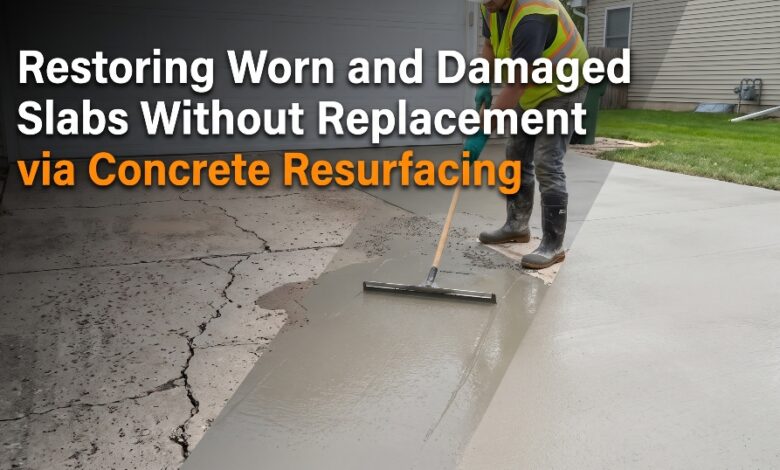
Concrete slabs are the unsung workhorses of modern residential, commercial, and industrial properties. From sun-drenched backyard patios and busy residential garages to high-traffic retail showrooms, warehouse aisles, and commercial kitchens, concrete endures constant punishment every single day. Over years of exposure to heavy vehicle loads, dropped tools, harsh weather fluctuations, moisture intrusion, and chemical spills, even the strongest slab begins to show signs of fatigue. Surface pitting, hairline cracks, stubborn oil stains, flaking layers, and uneven textures can quickly turn an otherwise solid foundation into an unsightly and potentially hazardous surface. Fortunately, property owners no longer need to face the daunting prospect of tearing everything out and starting from scratch to reclaim a pristine, functional floor.
For decades, the standard response to deteriorating concrete was complete demolition and replacement—a messy, expensive, and time-consuming ordeal involving jackhammers, heavy machinery, dumpster rentals, and weeks of downtime. Today, advancements in surface preparation, diamond grinding technology, and polymer-modified overlays have completely transformed how we renew aging slabs. Instead of discarding a structurally sound base simply because its top layer looks tired or worn, modern restoration techniques allow specialists to repair, level, and refinish the existing substrate directly. This smarter approach preserves the structural integrity of your property while delivering a fresh, durable, and visually appealing finish that rivals or exceeds brand-new concrete.
Concrete resurfacing offers a remarkably practical, cost-effective, and sustainable pathway to breathe new life into tired slabs without the disruption of full-scale demolition. By bonding specialized resurfacing compounds, high-build coatings, or polished finishes onto a thoroughly prepared concrete base, this restorative process eliminates surface imperfections while dramatically upgrading strength and aesthetics. Whether you are revitalizing a weathered driveway, upgrading a commercial workshop, or modernizing an indoor living area, understanding how resurfacing works reveals why so many property owners choose restoration over replacement.
Why Concrete Slabs Deteriorate Over Time
Before exploring how restoration transforms damaged surfaces, it helps to understand why concrete wears down in the first place. While concrete is renowned for its compressive strength and longevity, its porous nature makes its top layer vulnerable to environmental and mechanical stressors.
- Thermal Expansion and Contraction: Daily temperature swings and seasonal climate shifts cause concrete to subtly expand and contract. Over time, these natural movements create stress fractures, craze cracking, and surface flaking, especially in outdoor areas exposed to direct sunlight and rain.
- Heavy Mechanical Wear and Abrasion: In residential garages, industrial factories, and mechanic workshops, constant tyre friction, rolling forklifts, and heavy equipment gradually erode the top cream layer of the slab, leaving behind rough, dusty, and pitted patches.
- Moisture and Chemical Intrusion: Unsealed concrete acts like a rigid sponge. Water, de-icing salts, automotive fluids, cleaning chemicals, and food acids seep into microscopic pores, weakening the cement matrix from within and causing discoloration or spalling.
- Previous Flooring Removals: When old tiles, carpets, vinyl, or failing coatings are stripped away, they often leave behind stubborn adhesive residues, gouges, and uneven patches that require thorough surface correction before a new finish can be applied.
Key Benefits of Choosing Resurfacing Over Full Replacement
Opting to restore an existing slab rather than demolishing and pouring a new one delivers substantial advantages across budget, timeline, performance, and environmental impact.
- Significant Cost Savings: Full slab replacement involves paying twice—first for demolition, excavation, and landfill disposal, and second for new formwork, reinforcement, concrete delivery, and finishing labor. Resurfacing bypasses demolition entirely, typically costing a fraction of complete replacement while achieving a brand-new look.
- Minimal Disruption and Fast Turnaround: Tearing out a concrete floor creates deafening noise, thick clouds of dust, and weeks of unusable space. Modern resurfacing workflows utilize dust-free grinding equipment and fast-curing systems, allowing residential patios, retail floors, and commercial spaces to return to service in days rather than weeks.
- Superior Surface Strength and Durability: High-performance resurfacing systems—such as polymer-modified cementitious overlays, seamless epoxy coatings, and mechanically honed concrete—often boast higher compressive and flexural strength than standard poured concrete. They resist impact, hot tyre pickup, abrasion, and chemical spills far better than bare slabs.
- Eco-Friendly Sustainability: Concrete production carries a heavy carbon footprint, and demolished concrete takes up valuable landfill space. Preserving your existing structural slab conserves raw materials, reduces heavy transport emissions, and keeps tons of construction waste out of local landfills.
- Enhanced Safety and Slip Resistance: Worn, uneven, or overly smooth slabs present serious trip and slip hazards, particularly in wet areas like pool surrounds, commercial laundries, canteens, and entryways. Resurfacing allows installers to incorporate customized slip-resistant textures tailored to the exact safety needs of each space.
- Limitless Design Versatility: Far from looking like a simple patch job, modern resurfacing opens the door to sophisticated finishes. Property owners can choose from sleek matte or high-gloss coatings, decorative flake systems, natural stone textures, or clean architectural finishes that complement any interior or exterior style.
The Step-by-Step Restoration Process
Achieving a flawless, long-lasting resurfaced floor depends heavily on meticulous preparation and skilled application. Professional floor restoration follows a proven sequence to guarantee maximum adhesion and durability:
- Comprehensive Slab Assessment: Every successful project begins with inspecting the structural condition of the existing concrete. Specialists check for active structural movement, moisture vapor levels, hollow spots, and the depth of existing cracks to confirm the slab is a strong candidate for restoration.
- Floor Stripping and Contaminant Removal: If the slab is covered in old ceramic tiles, glued-down carpet, vinyl, or peeling paint, specialized stripping machines remove these layers cleanly down to the bare concrete substrate.
- Dust-Free Concrete Grinding: Using industrial diamond floor grinders connected to high-efficiency vacuum extraction systems, technicians grind away the weak, contaminated top layer of concrete. This crucial step removes stubborn glues, levels high spots, and opens the pores of the concrete to create an ideal mechanical profile for bonding.
- Crack and Spall Repair: Once the surface is clean and profiled, cracks, pits, control joints, and chipped edges are chased out and filled with high-strength epoxy mortars or structural repair compounds. Once cured, these repairs are ground flush with the surrounding floor so they disappear seamlessly beneath the new finish.
- Primer and Base Coat Application: A specialized penetrating primer is applied to seal the porous concrete, prevent air bubbles from rising through the finish, and create a tenacious chemical bond between the old slab and the new resurfacing layer.
- Resurfacing Overlay or Coating Installation: Depending on the project goals, technicians apply the chosen finish—whether a self-leveling cementitious topping, a multi-coat seamless resin system, decorative vinyl flakes, or a mechanically honed and densified surface.
- Protective Topcoat Sealing: Finally, a UV-stable, chemical-resistant clear sealer or topcoat is rolled or sprayed across the surface. Property owners can select matte, satin, or high-gloss sheens to lock in beauty and simplify ongoing cleaning.
Popular Finishes for Restored Concrete Floors
One of the greatest strengths of restoring worn concrete is the freedom to tailor the finished surface to the exact functional and visual demands of your environment.
- Seamless Epoxy and Resin Coatings: Ideal for residential garages, mechanic workshops, commercial kitchens, medical clinics, and industrial factories, high-build resin coatings create an impervious, hygienic, and easy-to-clean barrier. Available in solid colors or decorative flake blends, they shrug off oil, grease, and heavy impacts with ease.
- Mechanically Ground and Polished Finishes: For showrooms, retail stores, office spaces, and modern homes, diamond grinding and honing can transform a dull slab into a sleek, architectural floor. Depending on grinding depth, finishes can range from a subtle cream polish with minimal stone exposure to a bold, full-aggregate look in matte, semi-gloss, or mirror-like gloss.
- Polymer-Modified Cementitious Overlays: When exterior patios, driveways, pathways, or pool decks suffer from surface spalling or uneven textures, polymer-modified overlays provide a fresh, weather-resistant layer of concrete. These toppings can be troweled smooth, textured for slip resistance, or tinted to harmonize with outdoor landscaping.
- Non-Slip Commercial and Industrial Surfaces: High-traffic public facilities, stairways, cold rooms, and wet processing zones benefit from specialized aggregate-broadcast finishes that maintain reliable traction even under wet or greasy conditions.
Ideal Applications Across Residential and Commercial Spaces
Because modern resurfacing systems adapt to virtually any environment, they solve flooring challenges across a wide spectrum of properties:
- Residential Garages, Patios, and Living Areas: Turn a dusty, oil-stained garage into a showroom-worthy extension of your home, or refresh cracked outdoor entertaining areas without tearing up established gardens and landscaping.
- Retail Stores, Showrooms, and Galleries: Create clean, modern, light-reflective floors that elevate merchandise displays and withstand continuous foot traffic without showing wear patterns.
- Warehouses, Factories, and Workshops: Restore damaged concrete aisles to protect forklift tyres, eliminate concrete dusting, and establish clear, durable safety zones with minimal operational downtime.
- Hospitality, Healthcare, and Community Facilities: Commercial kitchens, canteens, hospitals, school corridors, and sports complexes rely on seamless resurfaced floors to meet strict hygiene standards while resisting daily wear.
Maintaining Your Newly Restored Concrete Surface
Once your worn slab has been transformed, keeping it looking pristine requires surprisingly little effort. Because resurfaced and sealed concrete eliminates open pores and grout lines, dirt and spills sit on top of the protective barrier rather than soaking in. Regular sweeping or dust mopping removes grit that could dull the finish over time, while occasional damp mopping with a pH-neutral cleaner keeps the surface spotless. Avoiding harsh acidic cleaners and placing protective pads beneath heavy static equipment ensures your restored slab stays strong, safe, and attractive for decades to come.
Restoring an aging concrete floor proves that you do not need to tear down the old to achieve something extraordinary. With proper preparation, durable materials, and expert craftsmanship, worn slabs can be reborn into resilient, low-maintenance surfaces built to perform for years. To discover how professional floor preparation and restoration can transform your property, visit https://grindtech.com.au/.