QuicklyShow Product Catalog Guide for 10×10 Trade Show Display Solutions
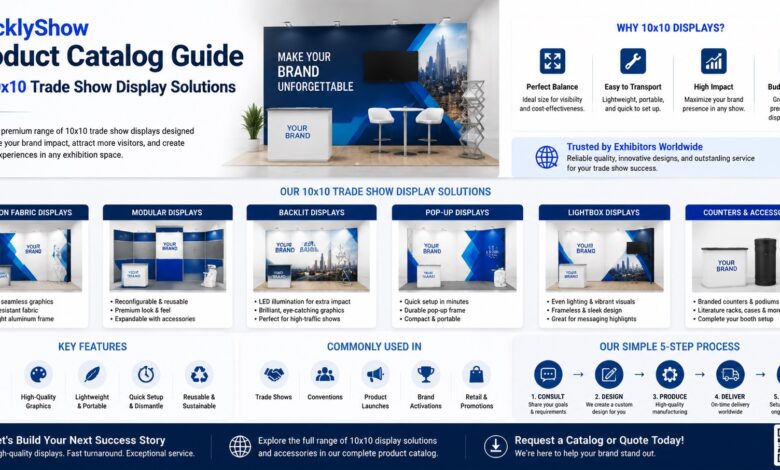
Choosing a trade show display becomes much easier when you know exactly what your booth needs to accomplish. A 10×10 exhibition space may look compact on a floor plan, yet thoughtful design can turn those 100 square feet into an inviting, highly visible presentation area. The right combination of graphics, counter space, portable structures, and modular elements helps exhibitors communicate clearly without making the booth feel crowded.
The QuicklyShow Product Catalog offers useful 10×10 trade show display concepts for exhibitors looking for a balance between appearance and practicality. Whether the priority is portability, flexible modular design, visitor engagement, or a clean branded backdrop, understanding the main display options can help you make a more confident choice.
1. Start with a Portable Booth and Practical Display Counter
A 10×10 Portable Trade Show Booth with Display Counter provides a straightforward way to organize a compact exhibition space. The large visual display area helps establish the booth’s identity, while the counter creates a clear place for greeting visitors, displaying samples, holding brochures, or using a tablet for demonstrations and lead collection.
The advantage of this arrangement is simplicity. Rather than filling the booth with multiple tables and separate stands, exhibitors can build the presentation around a strong backdrop and one multifunctional counter. Keeping the center relatively open makes the booth easier to enter and allows visitors to move naturally.
Counter placement matters as well. Positioning it slightly toward one side rather than directly across the entrance can prevent the booth from feeling closed. This creates a useful interaction area without sacrificing valuable floor space.
2. Explore a Modular Solution for Greater Layout Flexibility
A 10×10 Portable Modular Booth Design Solution can be especially appealing to exhibitors whose event requirements change throughout the year. Modular design gives you the freedom to think beyond one permanently fixed arrangement and use display components in ways that support different exhibition objectives.
Imagine attending one show where large graphics and brand visibility are the priority. At another event, you may want more space for conversations or demonstrations. A modular approach can make it easier to adapt the presentation while keeping the overall look recognizable and professional.
This flexibility also supports long-term use. Instead of treating every trade show like a completely new display project, exhibitors can maintain core presentation elements and adjust selected components when necessary. For companies attending multiple exhibitions, that balance between consistency and adaptability can be particularly valuable.
3. Use the Product Catalog to Compare 10×10 Display Options
The QuicklyShow Product Catalog can serve as a useful starting point when comparing different 10×10 trade show configurations. Looking at several styles before making a decision helps exhibitors understand how backdrops, counters, graphic surfaces, and open areas can be arranged within the same basic footprint.
Not every exhibitor needs the same type of booth. A product-focused presentation may benefit from convenient counter space for demonstrations, while a service-focused setup might place greater emphasis on an open conversation area. An exhibitor concentrating on visibility may prefer a layout that dedicates more surface area to large, readable graphics.
Comparing options also helps prevent overdesign. When space is limited, every component should have a reason to be there. A focused booth with fewer purposeful elements will often look more polished than one crowded with furniture, signs, and accessories.
4. Decide What Your Booth Must Accomplish
Before choosing a display, identify your main trade show objective. Do you want to generate leads, introduce a new offering, demonstrate products, hold conversations, or simply increase recognition? Your primary goal should influence the booth configuration.
For example, exhibitors collecting contact information may want an easily accessible counter and enough room for visitors to stop briefly. A demonstration-focused exhibit may need a more prominent working surface. If visibility is the main priority, a clean backdrop with bold messaging may deserve most of the visual attention.
Starting with the objective prevents unnecessary additions and helps every part of the booth contribute to a measurable purpose.
5. Keep the 10×10 Floor Plan Open
One of the easiest ways to make a 10×10 booth feel smaller is to fill it with too much furniture. Large tables, multiple stands, and poorly positioned counters can quickly create barriers.
Preserve an open path from the aisle into the booth. Visitors should feel comfortable approaching without needing to squeeze around equipment or staff members. Keeping the center open can also make the full backdrop easier to see.
Think of empty floor space as part of the design rather than wasted space. That breathing room makes the booth feel cleaner, encourages movement, and gives staff greater flexibility when several visitors arrive at once.
6. Give Your Main Graphics Visual Priority
Trade show visitors may pass dozens of booths in a short period, so complicated messaging can easily get lost. Your primary headline should be readable quickly and from a reasonable distance.
Use large typography, strong imagery, and a clear message rather than filling the backdrop with lengthy explanations. The display should create interest, not tell the entire story.
Supporting details can be shared through conversation, printed materials, digital presentations, or demonstrations. By simplifying the main graphics, exhibitors give visitors a much easier entry point into the message.
7. Make the Display Counter Multifunctional
In a compact exhibition space, components that perform several jobs are especially useful. A display counter can serve as a greeting station in the morning, a demonstration area during busy periods, and a lead-capture point throughout the event.
Keep the top organized. A few carefully chosen brochures, samples, or digital devices are usually more effective than an overflowing collection of materials.
If storage is available within the counter, use it to keep additional supplies and personal belongings away from public view. Reducing visible clutter helps the entire presentation feel more professional.
8. Consider Portability from the Beginning
A booth needs to perform well not only during the show but also during transportation, setup, dismantling, and storage. Portability therefore deserves attention before a display is selected.
A practical portable system can be particularly useful for exhibitors who participate in several events. Familiar components and a repeatable setup process can make exhibition preparation more predictable.
Good organization helps too. Keeping related pieces together and establishing a consistent packing routine can simplify repeated use and reduce confusion when the booth arrives at a new venue.
9. Plan for Reuse Across Future Exhibitions
A well-selected 10×10 display can continue serving an exhibitor beyond one campaign. Consider keeping the primary visual elements focused on messages that remain useful over time.
Event-specific information can then appear on smaller replaceable materials, counter displays, or other supporting graphics. This approach allows the main booth to stay recognizable while accommodating changing promotions.
A reusable setup also helps exhibitors create a more consistent exhibition identity. When visitors encounter a familiar presentation at multiple events, visual recognition can become easier.
10. Choose the Setup That Fits Your Exhibition Style
There is no single 10×10 display configuration that works perfectly for every exhibitor. The strongest choice depends on how your team travels, what you present, how visitors interact with you, and how frequently the booth needs to change.
Choose a straightforward portable arrangement when predictable setup and simplicity are priorities. Consider modular options when adaptability and changing configurations matter more. A display counter can be valuable in either approach because it provides practical functionality without demanding a large amount of floor space.
The goal is not to fit as many features as possible into 100 square feet. It is to create a booth where every element contributes to communication, visibility, or visitor engagement.
Conclusion
A useful QuicklyShow Product Catalog Guide for 10×10 Trade Show Display Solutions should ultimately help exhibitors look beyond appearance and consider how a booth functions in a real exhibition environment. Portable systems can make repeated event participation easier, modular designs can provide greater flexibility, and a well-positioned display counter can support everything from product demonstrations to lead collection.
The most successful 10×10 booths usually share a few qualities: clear messaging, open visitor flow, strong graphics, organized presentation areas, and components selected for a specific purpose. Compact exhibition spaces do not need to feel restrictive. When the layout is planned carefully, a 10×10 booth can become an efficient, professional environment that attracts attention and supports meaningful conversations.
By comparing options thoughtfully and matching the display to actual exhibition goals, exhibitors can create a setup that works comfortably today while remaining useful for future events.