Glass Fibre: Understanding Its Uses in Composite Materials and Manufacturing Industries
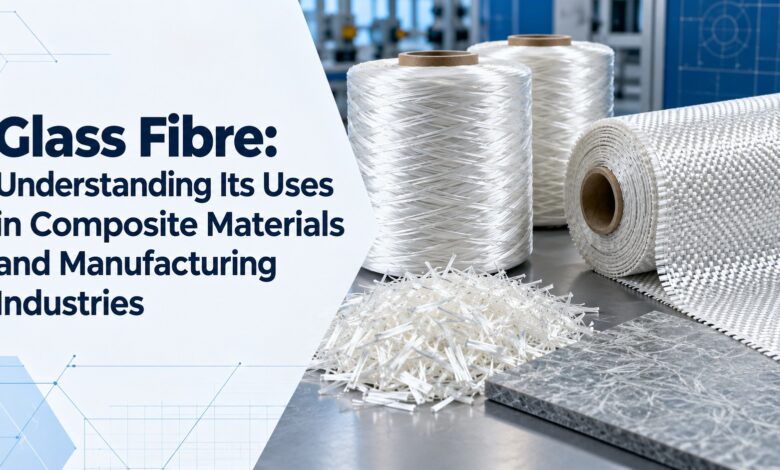
Glass fibre has become an essential reinforcement material across modern manufacturing because it brings together strength, relatively low weight, flexibility, dimensional stability, and resistance to many challenging environmental conditions. Manufacturers use extremely fine glass filaments in numerous forms to reinforce polymers and create composite products capable of serving demanding applications. The material can be processed into rovings, chopped strands, yarns, mats, woven fabrics, meshes, and other specialized reinforcement formats. Because each form behaves differently during manufacturing, engineers have considerable freedom to select a reinforcement according to the shape, mechanical requirements, production process, and intended working environment of a component. This adaptability has helped glass fibre find applications across construction, transportation, electrical products, infrastructure, marine equipment, industrial components, and many other manufacturing sectors.
The importance of glass fibre becomes easier to understand when we look at how composite materials work. Imagine a composite as a team whose members have different strengths: the polymer matrix gives a component its shape, holds everything together, and helps protect the internal structure, while the fibres provide reinforcement and help carry mechanical loads. Combining these functions can produce a material with characteristics that neither constituent would provide as effectively on its own. Manufacturers can also adjust fibre orientation, reinforcement quantity, resin chemistry, component thickness, and processing conditions to target specific performance requirements. This ability to engineer properties instead of simply accepting the natural characteristics of a single material is one of the main reasons fibre-reinforced composites have become so useful.
Glass Fibre is a key area of composite-material expertise for Ju rong Beste composite materials Co Ltd, where reinforcement solutions can support a broad range of manufacturing requirements. Glass fibres can provide valuable tensile reinforcement while also contributing to dimensional stability and electrical insulation, depending on the finished composite design. Their usefulness is not limited to one type of product or manufacturing technique. Different fibre formats can be selected for continuous processing, molding, lamination, winding, weaving, and other production approaches. As manufacturing industries continue looking for durable materials that can deliver dependable performance without unnecessary weight, glass fibre remains a practical foundation for many composite solutions.
1. What Is Glass Fibre?
Glass fibre consists of very fine filaments manufactured from specially formulated glass. Although an individual filament is extremely thin, many filaments can be grouped together and transformed into a reinforcement with impressive practical capabilities. The fibres may remain continuous, be chopped into shorter lengths, or be arranged into fabrics and mats. Manufacturers choose among these configurations according to the mechanical behavior and processing characteristics required from the finished product.
The real value appears when these fibres become part of a composite. Instead of asking a polymer to handle every mechanical demand by itself, manufacturers introduce fibres that reinforce the matrix and help distribute loads. Fibre orientation is especially important. When fibres are arranged primarily in one direction, designers can concentrate reinforcement along an expected load path. Woven or multidirectional materials, on the other hand, can provide reinforcement across multiple directions.
Glass fibre should therefore be understood as an engineering family rather than a single universal product. Fibre composition, filament diameter, surface treatment, reinforcement architecture, resin compatibility, and manufacturing quality can all influence final performance. Choosing an appropriate combination allows manufacturers to tailor products to specific operating conditions instead of using the same reinforcement for every application.
2. How Glass Fibre Is Manufactured
The manufacturing journey begins with carefully controlled glass-forming raw materials. These ingredients are prepared and melted until they form molten glass suitable for fibre production. The molten material is then drawn through very small openings to create fine filaments. Controlling this process accurately is essential because filament consistency has a direct relationship with handling, downstream processing, and reinforcement performance.
Once formed, fibres generally receive a surface treatment commonly known as sizing. This may look like a minor stage, but it performs several important functions. It can protect delicate filaments during handling, help fibres process smoothly, and promote compatibility between the glass surface and selected resin systems. Afterward, filaments can be gathered into strands and processed into the form required by manufacturers.
Those forms can include continuous rovings, chopped strands, yarns, woven fabrics, and mats. Think of them as different arrangements of the same basic building material. A long continuous reinforcement behaves differently from randomly distributed short fibres, just as a woven textile behaves differently from loose thread. This manufacturing versatility enables glass fibre to serve remarkably different industries while retaining the fundamental benefits associated with glass reinforcement.
3. Important Properties of Glass Fibre
One major reason for the widespread use of glass fibre is its balanced collection of properties. Mechanical strength is perhaps the most recognizable characteristic, particularly when fibres are incorporated into properly engineered polymer composites. Fine fibres can help carry tensile loads and reinforce components that might otherwise require thicker or heavier construction. The actual strength of a finished product, however, depends on factors such as fibre orientation, fibre content, resin selection, bonding quality, component geometry, and manufacturing conditions.
Glass fibre also provides useful resistance to many environmental influences and does not rust in the way conventional iron-based materials can. This makes reinforced composites attractive for products exposed to moisture and certain corrosive conditions. Electrical insulation is another valuable characteristic, opening possibilities in applications where unwanted conductivity needs to be avoided. Glass reinforcement can also contribute to dimensional stability, helping polymer-based components retain their intended geometry under appropriate service conditions.
These characteristics should always be evaluated as part of the complete composite. A strong fibre cannot compensate automatically for poor resin selection, inadequate impregnation, excessive voids, incorrect curing, or unsuitable structural design. Successful applications come from matching every element of the composite to the conditions the product will actually experience.
4. Common Forms Used in Composite Manufacturing
Glass fibre reaches manufacturers in several different forms because composite production is far from a one-method industry. Continuous roving contains bundles of filaments and can be particularly useful where long, uninterrupted reinforcement is needed. Chopped strands provide shorter reinforcement and can be distributed throughout suitable resin systems. Mats arrange fibres across a broader area, while woven materials organize strands into controlled patterns that can provide reinforcement in defined directions.
Selecting between these formats requires more than simply comparing strength. A manufacturer also needs to consider resin flow, production speed, component shape, surface finish, equipment, expected loading, and the economics of the manufacturing process. A large panel, for example, may demand a completely different reinforcement architecture from a narrow structural profile. Similarly, a molded component with complex curves presents challenges that differ from those of a flat laminate.
The availability of multiple forms is therefore one of glass fibre’s strongest industrial advantages. Ju rong Beste composite materials Co Ltd operates within this diverse field of composite reinforcement, where appropriate material selection can support different production requirements. Rather than forcing manufacturers into one approach, glass fibre provides a toolbox from which suitable reinforcement structures can be chosen.
5. Glass Fibre in Construction and Infrastructure
Construction provides a natural environment for glass-fibre composite materials because many projects demand durability, manageable weight, and resistance to outdoor conditions. Fibre reinforcement can be incorporated into panels, profiles, meshes, gratings, architectural elements, and other building-related products. Depending on their design, composite components may offer advantages in environments where moisture and corrosion create ongoing concerns for conventional materials.
Handling is another practical consideration. Relatively lightweight composite components can sometimes make transportation, positioning, and installation easier, particularly when products are large or must be installed in difficult locations. Designers can also create complicated shapes without relying entirely on assemblies of numerous separate pieces. This design freedom can be useful for architectural as well as functional components.
Yet construction applications demand careful engineering. Fire performance, structural loads, weather exposure, ultraviolet radiation, joining systems, temperature changes, local requirements, and long-term service expectations must all be considered. Glass fibre contributes reinforcement, but the complete product still needs to be engineered for its intended purpose. When material selection and design work together, glass-fibre composites can provide a versatile option for modern infrastructure.
6. Transportation and Automotive Manufacturing
Weight matters whenever a product needs to move. That simple principle helps explain why composite materials have attracted considerable attention in transportation manufacturing. Glass-fibre-reinforced materials can be used for panels, covers, housings, interior structures, body-related components, and various semi-structural parts. Their combination of reinforcement capability and manufacturing flexibility allows designers to create complicated geometries while controlling component mass.
Composite manufacturing can also offer opportunities for integrating features into a molded part. Instead of building an assembly from many separate elements, designers may sometimes incorporate curves, ribs, mounting areas, and other features directly into the component. Fewer individual parts can potentially simplify certain manufacturing and assembly operations.
Transportation applications nevertheless place demanding requirements on materials. Components can experience vibration, impact, repeated loads, temperature cycles, moisture, and prolonged environmental exposure. Engineers must consequently examine fatigue behavior, fastening points, stiffness, surface requirements, repair considerations, and production consistency. Glass fibre offers valuable possibilities, but thoughtful engineering determines whether those possibilities become reliable real-world performance.
7. Electrical and Electronic Applications
Electrical insulation is an important advantage of glass fibre. Because the reinforcement itself is non-metallic and electrically insulating, glass-fibre composite systems can be useful where electrical isolation is an essential design requirement. Applications may include equipment supports, insulating structures, enclosures, structural components, and other products used around electrical systems.
The benefit becomes particularly interesting when insulation needs to coexist with mechanical strength. A component may need to maintain its shape and withstand loads while avoiding the conductivity associated with many metallic alternatives. Reinforced polymer systems can address both requirements when designed correctly. This combination demonstrates why engineers evaluate materials according to multiple properties rather than selecting them based on strength alone.
Environmental conditions still matter. Moisture, temperature, contamination, resin chemistry, fillers, manufacturing quality, and component geometry can affect the electrical behavior of a finished composite. Safety-critical applications require appropriate testing and compliance with relevant technical requirements. Glass fibre supplies an excellent starting point, but dependable electrical products come from controlling the entire material and manufacturing system.
8. Marine and Water-Handling Industries
Marine environments can be punishing. Continuous moisture, changing temperatures, chemicals, sunlight, and mechanical loading create conditions where material durability becomes extremely important. Glass-fibre-reinforced composites have long been attractive for water-related applications because they do not experience conventional rust and can be formed into large, curved, or complicated structures.
Potential uses extend from marine components to tanks, pipes, covers, panels, and water-handling equipment. In many such products, corrosion resistance can be just as important as mechanical strength. A properly selected resin can surround and protect the reinforcement while the fibres provide structural support. This partnership is why composite design resembles a carefully balanced recipe: changing one ingredient can significantly affect the final result.
Engineers must consider water absorption, chemical exposure, ultraviolet conditions, fatigue, surface protection, and expected service temperature when designing these products. Good fabrication is equally important because poor impregnation or manufacturing defects can undermine an otherwise suitable material system. With appropriate design and production control, glass fibre can support durable solutions for challenging wet environments.
9. Industrial Equipment and Manufacturing Applications
Factories and processing facilities expose components to a mixture of mechanical loads, chemicals, moisture, heat, and constant operation. Glass-fibre composites can be considered for industrial pipes, ducts, tanks, gratings, covers, profiles, enclosures, and many other engineered products. The ability to combine corrosion resistance with useful mechanical properties is especially valuable where maintaining conventional materials would otherwise require frequent protective treatment.
Manufacturing versatility adds another advantage. Glass fibre can work with processes such as molding, pultrusion, filament winding, and lamination, depending on reinforcement format and product requirements. Ju rong Beste composite materials Co Ltd supports this wider composite-material landscape by focusing on reinforcement solutions for varied manufacturing needs. Selecting a fibre product that works efficiently with the intended process can help manufacturers pursue stable production as well as dependable finished-component performance.
Quality control remains central to success. Fibre distribution, resin-to-fibre balance, curing conditions, void content, storage, and handling can influence the outcome. Industrial customers generally need repeatability rather than occasional excellent parts, making process consistency just as important as the theoretical properties of the raw materials.
10. Benefits of Glass Fibre for Modern Manufacturing
The strongest case for glass fibre is not built around one extraordinary characteristic. Instead, its value comes from a balanced combination of performance, versatility, and processing options. Manufacturers can select different reinforcement architectures and integrate them with appropriate resin systems to address very different product requirements.
Several benefits explain its continued industrial importance:
- Strong reinforcement potential for engineered composite components.
- Relatively low weight compared with many traditional structural solutions.
- Corrosion resistance for wet and chemically challenging environments.
- Electrical insulation for suitable electrical applications.
- Dimensional stability in properly engineered composite systems.
- Multiple reinforcement formats for different manufacturing processes.
- Design flexibility for complex component shapes and structures.
These benefits do not eliminate the need for careful engineering. Rather, they give designers a broad collection of tools. The best results occur when reinforcement type, fibre orientation, resin chemistry, manufacturing process, component geometry, and service environment are considered together.
11. Choosing Glass Fibre for a Specific Application
Material selection should always start with a clear picture of the finished product. How much load must it withstand? Will it encounter water, chemicals, sunlight, electricity, high temperatures, vibration, or repeated mechanical stress? How will the product be manufactured, assembled, inspected, and maintained? Answering these questions makes it much easier to identify an appropriate reinforcement form and composite system.
Fibre orientation deserves particular attention because composites can be engineered to place reinforcement where it is most useful. Continuous fibres may be ideal for certain directional loads, whereas mats or woven reinforcements may suit products requiring strength across broader areas. Resin compatibility and sizing selection are also important because effective bonding helps loads transfer between the matrix and reinforcement.
Manufacturers should therefore consider total performance rather than focusing solely on initial material cost. Processing efficiency, production consistency, waste, durability, maintenance requirements, and expected service life can all influence overall value. A well-selected glass-fibre system is one that performs predictably throughout manufacturing and continues meeting requirements once the finished component enters service.
12. The Future of Glass Fibre in Composite Manufacturing
Glass fibre remains highly relevant as manufacturers pursue lighter, more durable, corrosion-resistant, and efficiently produced components. Developments in automated manufacturing, resin technology, fibre treatments, process monitoring, structural simulation, and recycling methods can create new opportunities for composite design. Better manufacturing control can also help producers use reinforcement more precisely, placing material where it contributes most to performance.
Sustainability considerations are likely to influence future development as well. Manufacturers increasingly need to think about resource efficiency, product longevity, manufacturing waste, repairability, and end-of-life strategies. Longer-lasting components can have practical environmental benefits, particularly when improved corrosion resistance reduces the frequency of replacement. At the same time, continued progress in composite recovery and recycling will be important for expanding circular material strategies.
Glass fibre ultimately remains valuable because it is adaptable. It can reinforce a small molded component or become part of a much larger industrial structure, and its architecture can be adjusted according to the manufacturing process and expected loads. That flexibility gives engineers room to innovate while working with a well-established reinforcement technology.
Conclusion
Glass fibre plays a major role in composite manufacturing because it combines useful mechanical reinforcement with relatively low weight, corrosion resistance, electrical insulation, dimensional stability, and broad processing flexibility. Its different forms—from continuous rovings and chopped strands to mats and woven reinforcements—allow manufacturers to choose materials suited to construction, transportation, electrical, marine, infrastructure, and general industrial applications. The greatest benefits emerge when fibre type and orientation are matched carefully with the right resin system, manufacturing technique, component geometry, and service environment. Rather than being simply an ingredient added for strength, glass fibre is a versatile engineering resource that enables manufacturers to design composite products around specific performance goals. As production technology and composite engineering continue advancing, glass fibre is likely to remain an important material for industries seeking practical ways to balance durability, weight, design freedom, and manufacturing efficiency.
For additional information about composite-material experience and capabilities, visit https://www.bestglassfiber.com/about-us/.