Custom Nylon Hose Sleeve Solutions for Automotive Wire and Hose Protection
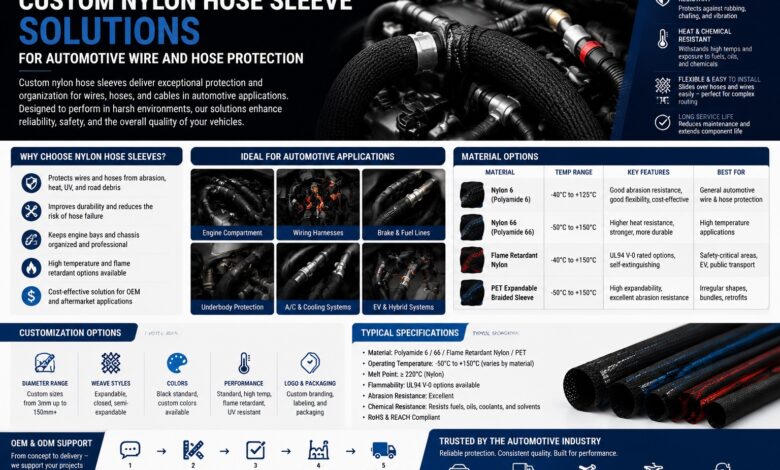
Modern vehicles depend on an intricate network of wires, cables, fluid lines, and flexible hoses. These components operate near hot engines, vibrating panels, sharp metal edges, moving parts, dust, moisture, and road debris. Without dependable protection, repeated contact can gradually wear through insulation or hose coverings, increasing the risk of electrical faults, leaks, unexpected maintenance, and shortened component life.
Automotive protection is not simply about covering a wire or hose with an extra layer. The protective material must remain flexible enough to follow complex routing paths while resisting abrasion during thousands of operating cycles. It should also support neat installation, simplify inspections, and withstand the everyday movement created by engines, suspension systems, pumps, fans, and other mechanical assemblies.
Custom Nylon Hose Sleeve options from qxcablesleeve provide a practical way to shield automotive wires and hoses from friction, vibration, surface wear, and accidental contact. A properly selected sleeve forms a durable outer barrier around vulnerable components without requiring major changes to the original system layout. This balanced combination of protection and flexibility makes nylon sleeving useful for vehicle production, upgrades, restoration projects, maintenance work, and specialized automotive equipment.
Why Automotive Wires and Hoses Need Extra Protection
A vehicle may look solid and stable from the outside, but many parts beneath the hood and chassis are constantly moving. The engine vibrates, hoses expand under pressure, wiring shifts slightly with heat, and suspension movement changes the position of nearby components. Even a small amount of repeated movement can cause serious wear when a wire or hose rubs against a bracket, panel, fastener, or another line.
Temperature changes add another challenge. Automotive components may move between cold outdoor conditions and intense heat near the engine or exhaust area. Materials expand and contract as temperatures rise and fall, which can alter routing tension and create new contact points. A wire that appears safely positioned during installation may begin rubbing against a surface after months of vibration and thermal cycling.
Nylon hose sleeves help manage these conditions by creating a replaceable protective layer. Instead of allowing the main hose cover or wire insulation to receive every scrape, the sleeve absorbs much of the surface contact. This approach supports longer component life and gives technicians a visible wear layer that can be checked during routine inspections.
Protection Against Abrasion and Friction
Abrasion is one of the most common causes of damage in automotive wire and hose systems. It often develops slowly, which makes it easy to overlook. A hose may touch a metal edge only when the engine moves under load, or a wire bundle may rub against a panel only when the vehicle travels over rough ground.
Each contact may remove only a tiny amount of material, but thousands of repeated movements can eventually expose reinforcement fibers, conductors, or inner hose layers. Once the protective outer surface is weakened, moisture, dirt, chemicals, and heat can accelerate the damage. A small worn area can then become a larger reliability problem.
A nylon sleeve creates a tough interface between the protected component and its surroundings. Its woven construction allows it to flex while resisting repeated rubbing. This is especially useful around mounting points, frame openings, tight bends, clamps, brackets, and areas where multiple lines cross.
The main abrasion-control benefits include:
- Reduced direct contact between wires, hoses, and hard surfaces
- Added protection around bends and routing transitions
- Lower risk of insulation damage from continuous vibration
- Improved durability in confined engine compartments
- A visible outer layer that reveals wear before the protected component is affected
By placing wear on the sleeve rather than the main component, maintenance teams can often address developing problems earlier and more efficiently.
Managing Vibration in Engine Compartments
Engine compartments contain many sources of vibration. The engine itself produces continuous movement, while cooling fans, pumps, compressors, belts, and road conditions add changing vibration patterns. These forces travel through brackets, panels, and mounting structures, causing nearby wires and hoses to shift repeatedly.
A bare hose striking a metal surface can produce tapping, rattling, or knocking sounds. A wire bundle rubbing against a panel may create a faint buzz that becomes more noticeable over time. More importantly, the same movement producing the noise may also be damaging the component.
Nylon sleeving adds a cushioning layer that softens contact and helps distribute movement across a broader surface. It does not stop the engine from vibrating, but it reduces the harshness of direct impacts. When combined with proper clamps, supports, and routing, sleeving can contribute to a quieter and more controlled installation.
This benefit is valuable in both everyday vehicles and specialized machines. Off-road vehicles, service vehicles, agricultural machines, and heavy-duty automotive equipment may experience stronger vibration because of rough terrain or extended operating hours. Added protection helps their wiring and hose systems remain organized and secure under demanding conditions.
Organizing Complex Wire and Hose Routes
Automotive systems have become increasingly complex. A single vehicle may contain wiring for lighting, sensors, controls, safety systems, communication devices, accessories, and monitoring equipment. It may also contain fuel lines, coolant hoses, brake-related lines, air hoses, hydraulic hoses, and other flexible connections.
When these components are routed through limited spaces, organization becomes essential. Loose wires and hoses can sag, cross moving parts, touch hot surfaces, or create crowded service areas. An untidy installation also makes troubleshooting harder because technicians must separate individual lines before identifying the source of a problem.
Custom nylon sleeves can group compatible components into clean, manageable bundles. A suitable sleeve keeps related wires together while preserving the flexibility needed for installation and service. It can also help prevent individual lines from spreading into nearby moving or abrasive areas.
Organized routing offers several practical advantages:
- Cleaner installation: Bundled lines create a more professional appearance.
- Easier maintenance: Technicians can follow protected routes more quickly.
- Improved space use: Flexible bundles fit more efficiently through narrow areas.
- Reduced movement: Grouped components are less likely to swing or vibrate independently.
- Better protection: The sleeve shields several compatible lines with one outer barrier.
A well-organized automotive system is not only easier to inspect; it is also less likely to develop avoidable contact damage.
Supporting Flexible Automotive Installations
Rigid protective coverings can work well in straight sections, but automotive routing rarely follows a simple path. Wires and hoses often curve around engine components, pass through openings, bend near connectors, and move with adjustable assemblies. Protection must accommodate these shapes without creating excessive stiffness.
Nylon hose sleeves are valued for their flexibility. They can follow curved routes and adapt to irregular bundles while maintaining surface protection. This makes them suitable for areas where components need to move naturally during vehicle operation.
Flexibility is particularly important near hinged panels, adjustable seats, moving suspension components, steering assemblies, lifting mechanisms, and engine-mounted equipment. The sleeve should support movement rather than forcing the wire or hose into an unnatural position. A properly sized option allows the protected component to bend within its recommended limits.
Custom sizing improves this result. A sleeve that is too narrow may be difficult to install or may compress the bundle. A sleeve that is too wide can shift, bunch, or take up unnecessary space. Matching the sleeve diameter and length to the actual application creates a cleaner fit and more consistent protection.
Shielding Components During Assembly and Maintenance
Wire and hose damage does not occur only while a vehicle is operating. Components may also be scraped, pinched, or pulled during manufacturing, installation, repair, and modification. Tools, sharp brackets, unfinished edges, and repeated handling can mark exposed surfaces before the vehicle even returns to service.
Protective sleeving helps reduce the risk of accidental surface damage during these activities. Technicians can route a sleeved bundle through a tight opening with greater confidence because the outer covering provides a barrier against light scraping. It also helps prevent individual wires from catching on nearby fasteners or edges.
During maintenance, a visible sleeve can make protected routes easier to identify. It separates the bundle visually from surrounding components and may help technicians avoid placing tools or replacement parts directly against sensitive lines. When a sleeve shows heavy wear, it can also point to a routing issue that needs correction.
The result is a more service-friendly system. Rather than waiting for a hidden wire or hose to fail, maintenance teams can inspect the protective layer and take action when warning signs first appear.
Choosing the Right Custom Sleeve
Selecting the right sleeve begins with understanding the application. Automotive environments differ widely, so the most suitable size and construction depend on the component being protected, its location, its movement, and the type of contact it may experience.
Important selection factors include:
- Outside diameter: Measure the hose or completed bundle rather than guessing.
- Required length: Cover the entire contact area with enough extra length for movement.
- Bend requirements: Confirm that the sleeve can follow the intended routing path.
- Abrasion level: Identify areas with frequent rubbing or contact against rough surfaces.
- Operating conditions: Consider heat, moisture, dirt, vibration, and nearby fluids.
- Installation method: Plan how the sleeve will be positioned and secured.
- Inspection access: Ensure fittings, connectors, and service points remain reachable.
Custom dimensions are especially helpful for unusual layouts. A tailored sleeve can protect a precise hose section, fit a particular bundle, or accommodate an assembly that does not match standard sizes. This reduces excess material and supports a more polished final installation.
Installation Practices That Improve Protection
Even a strong sleeve must be installed correctly to provide dependable results. The first step is to inspect the full routing path. Look for sharp edges, moving parts, heat sources, tight bends, damaged clamps, and polished areas that indicate repeated rubbing.
The sleeve should extend beyond the visible wear point because wires and hoses often shift during operation. Where possible, observe the vehicle or equipment through its full range of movement. Steering, suspension travel, engine movement, lifting actions, and hinged assemblies can reveal contact points that are not visible while the system is stationary.
Secure the sleeve so that it remains over the intended area without creating a tight pressure point. Fastening methods should not cut into the sleeve or squeeze the protected hose. Connectors, fittings, and inspection areas should remain accessible.
After installation, confirm that the protected component can still move naturally. A sleeve should reduce damage risk without pulling on fittings, restricting bends, or forcing the assembly against another surface. Careful installation turns a simple covering into an effective long-term protection solution.
Positive Benefits for Automotive Reliability
Reliable vehicles are built from many small protective decisions. A sleeve may appear to be a minor addition, but it can help prevent the chain of events that begins with light rubbing and ends with an electrical interruption, fluid leak, or unexpected repair.
Custom nylon hose sleeves support reliability by protecting vulnerable surfaces before serious wear develops. They also improve organization, reduce contact noise, simplify inspections, and create a cleaner system layout. These benefits can be valuable during initial assembly and throughout the vehicle’s working life.
For owners and technicians, the greatest advantage is peace of mind. Protected wires and hoses are better prepared for vibration, movement, maintenance activity, and everyday road conditions. The sleeve acts like a durable outer jacket, standing between critical components and the rough environment around them.
By selecting the right dimensions, installing the sleeve carefully, and inspecting it regularly, automotive systems can remain safer, tidier, and more dependable. qxcablesleeve solutions make it easier to add targeted protection exactly where wires and hoses face the greatest risk.
Conclusion
Custom nylon hose sleeves offer a straightforward and effective way to protect automotive wires, cables, and hoses. Their flexible woven structure helps resist abrasion, soften vibration-related contact, organize complex bundles, and support cleaner routing through confined spaces. They are especially useful near engines, frames, brackets, moving assemblies, and other locations where repeated friction could damage exposed components.
The best results come from viewing sleeving as part of a complete protection strategy. Good routing, suitable clearances, secure supports, regular inspection, and proper sleeve sizing all work together. When these details are handled carefully, vehicle systems become easier to maintain and better equipped for long-term use.
For custom automotive wire and hose protection options, visit https://qxcablesleeve.com/products/nylon-hose-sleeve/.