Driving MetaHumans in Real Time: Setting Up a Mocap Unreal Engine Pipeline
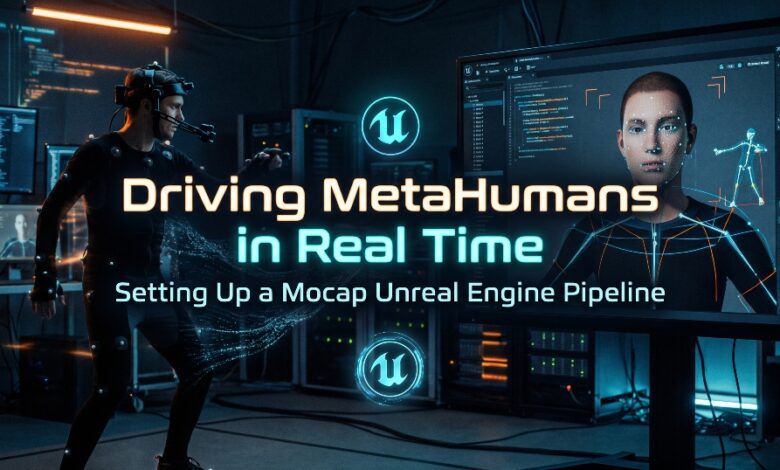
Bringing hyper-realistic digital humans to life has never been more accessible, thanks to the fusion of real-time rendering engines and wearable inertial tracking hardware. Digital creators, game developers, filmmakers, and virtual streamers are constantly seeking faster, more intuitive ways to bridge physical human expression with virtual avatars. Instead of spending weeks manually keyframing subtle shoulder shifts, natural weight transfers, and intricate finger articulations, modern creators can now step into a performance capture suit and watch their digital character mirror every nuance instantaneously inside a 3D environment.
A well-structured real-time character pipeline transforms how creative teams prototype, direct, and ship interactive storytelling. When a director can see an actor performing live inside a fully lit digital set, creative decisions happen on the spot rather than days later in post-production. This immediacy unlocks genuine spontaneity, allowing performers to react naturally to virtual props, environmental lighting, and fellow actors in shared digital spaces.
Setting up a seamless Mocap Unreal Engine workflow becomes remarkably straightforward when pairing high-precision inertial sensors with the dedicated real-time broadcasting ecosystem developed by Virdyn. Designed to eliminate heavy post-processing bottlenecks, this integrated hardware and software architecture captures full-body kinematics, subtle hand gestures, and facial expressions simultaneously, streaming clean skeletal data directly into your active scene with ultra-low latency.
Why Real-Time Performance Capture Transforms Digital Human Production
Real-time motion capture shifts character animation from a slow, technical assembly line into an immediate, expressive performance art. By streaming live skeletal and facial data directly onto photorealistic MetaHuman rigs, creators gain immense creative freedom and production efficiency across every stage of development.
- Instant Creative Feedback and Directing: Directors and animators no longer have to wait for overnight renders or complex data cleanups to evaluate a scene. Watching a digital human perform live inside the final virtual environment allows immediate adjustments to camera framing, lighting mood, and actor blocking while the performer is still on set.
- Authentic Micro-Movements and Organic Nuance: Human movement is defined by tiny, subconscious details—breathing rhythms, subtle weight shifts between feet, and natural finger curls. Inertial sensors capture these organic micro-movements effortlessly, preventing the stiff, robotic look that often plagues manually keyframed character animations.
- Dramatic Reduction in Production Timelines: Traditional animation workflows require weeks of keyframing, curve editing, and polish for even a short dialogue sequence. Real-time capture condenses days of animation labor into a single afternoon session, allowing small indie teams and solo creators to produce studio-grade cinematics on tight schedules.
- Seamless Multi-Actor Interaction: Modern performance pipelines support multiple performers sharing the same virtual stage simultaneously. Actors can make genuine eye contact, react to physical cues, and coordinate complex blocking in real time, elevating the emotional authenticity of narrative scenes and virtual live broadcasts.
Essential Components of a Real-Time MetaHuman Pipeline
Building a dependable live capture setup requires harmonizing three core pillars: accurate wearable hardware, dedicated motion processing software, and an optimized real-time engine environment. Each layer plays a vital role in ensuring smooth frame rates and lifelike character deformation.
- Full-Body Inertial Motion Capture Suit: Unlike optical camera arrays that require dedicated studio spaces and suffer from line-of-sight occlusion, inertial sensor suits track rotational and positional data directly on the body. Multi-node sensor placement across the torso, limbs, and head ensures rock-solid stability even during dynamic jumps, crouches, or floor work.
- Multi-Node Motion Capture Gloves: Photorealistic digital humans lose their believability the moment their hands look stiff or lifeless. Dedicated mocap gloves equipped with high-precision finger sensors capture independent joint bends and subtle thumb oppositions, bringing expressive hand gestures and delicate object interactions into your live scene.
- Dedicated Motion Processing and Broadcasting Studio: Raw sensor telemetry must be translated into clean skeletal hierarchies before entering a game engine. Virdyn streamlines this step through its proprietary studio software, which handles sensor calibration, magnetic interference compensation, posture solving, and real-time network broadcasting in one unified interface.
- Live Link Integration Inside Unreal Engine: The bridge between external capture software and your virtual character is the Live Link protocol. By receiving live skeletal and facial streams over a local network, Unreal Engine updates the MetaHuman Animation Blueprint on every single frame without interrupting viewport responsiveness.
Step-by-Step Setup: Connecting Your Hardware to Unreal Engine
Establishing a rock-solid connection between your capture suit and your MetaHuman character takes only a few structured steps. Following a clean configuration sequence ensures accurate joint rotations, proper floor contact, and zero drift throughout long recording or streaming sessions.
- Prepare Your Unreal Engine Project Environment: Begin by launching a clean project in Unreal Engine and enabling the essential Live Link and MetaHuman plugins in the plugin manager. Importing your chosen MetaHuman character into the project early ensures all skeletal assets, control rigs, and Animation Blueprints are compiled and ready before you initiate data streaming.
- Install and Configure the Motion Capture Plugin: Place the dedicated motion capture plugin into your project’s Plugins directory and restart the editor so the engine recognizes the custom Live Link source modules. Verify that your workstation and capture system are connected to the same high-speed local network to guarantee minimal packet latency.
- Calibrate Your Wearable Sensors in the Capture Studio: Power on your full-body suit and mocap gloves, ensuring all sensor nodes show strong battery levels and stable wireless signals. Perform the standard neutral posture calibration inside the studio software, standing straight with arms relaxed at your sides so the solver establishes an accurate zero-point reference for every bone.
- Activate Real-Time Data Broadcasting: Once your virtual skeleton moves cleanly inside the capture studio preview viewport, enable the real-time data broadcast option. Virdyn provides direct data streaming modes tailored specifically for game engines, allowing skeletal transforms and finger joint rotations to broadcast continuously over local ports.
- Bind the Live Stream to Your MetaHuman Blueprint: Open the Live Link panel inside Unreal Engine and add the incoming stream source from your capture software. Inside your MetaHuman’s Animation Blueprint, route the Live Link Pose node directly into the output pose, adjusting hip height offsets so your character’s feet rest firmly on the virtual floor plane.
- Layer Real-Time Facial Capture for Complete Expression: To match expressive body language with lifelike facial emotion, pair your body stream with a head-mounted camera or depth-sensing facial capture source. Routing facial blendshapes into the MetaHuman face blueprint synchronizes lip movement, eyebrow raises, and subtle eye darts with your full-body performance.
Optimizing Performance and Visual Fidelity in Live Scenes
Running photorealistic digital humans alongside real-time physics, dynamic global illumination, and live skeletal streaming demands smart resource management. Fine-tuning your scene settings guarantees silky-smooth frame rates during live broadcasts or interactive virtual production shoots.
- Manage Level of Detail (LOD) Settings: High-resolution MetaHumans feature intricate hair strands, detailed skin shaders, and dense facial topologies that look incredible in close-ups. For medium or wide camera shots during live sessions, configuring automatic LOD transitions preserves GPU headroom while keeping facial expressions crisp and readable.
- Isolate Capture Workstations on a Clean Local Network: Network jitter can introduce micro-stutters into otherwise fluid skeletal animations. Running your motion capture broadcasting software and Unreal Engine on the same high-performance workstation—or connecting two machines via a dedicated wired Ethernet link—eliminates wireless interference and guarantees deterministic frame delivery.
- Enable Hardware-Accelerated Pose Evaluation: Modern real-time engines allow skeletal deformation and skin weighting calculations to run directly on the GPU. Activating GPU skin cache optimization prevents CPU bottlenecks when driving multiple complex digital characters simultaneously in crowded virtual environments.
- Fine-Tune Joint Constraints and Floor Contact: Even the most accurate inertial sensors benefit from subtle engine-side constraints. Utilizing Unreal Engine’s Control Rig alongside your live stream lets you apply foot-locking solvers and natural spine smoothing, ensuring that planted feet never slide across uneven virtual terrain.
Expanding Creative Horizons Across Industries
Once your real-time digital human pipeline is up and running, the creative possibilities extend far beyond traditional video game cutscenes. Creators across diverse disciplines are leveraging live MetaHuman workflows to pioneer entirely new formats of interactive entertainment and digital communication.
- Virtual Live Streaming and Digital Creators: Content creators and virtual hosts can embody photorealistic digital personas during live broadcasts, interacting directly with audience chat in real time. Full-body expressiveness paired with articulate finger tracking makes live streams feel genuinely personal, energetic, and engaging.
- Pre-Visualization and Virtual Film Production: Filmmakers use real-time character pipelines to scout virtual locations, test lens choices, and rehearse dramatic scenes with digital stand-ins before stepping onto a physical soundstage. Directors can record multiple takes inside Sequencer, immediately reviewing camera angles and actor blocking in full lighting.
- Interactive Education, Training, and Simulation: Educational institutions and enterprise training teams build lifelike virtual instructors and roleplay scenarios powered by live performers. Real-time human movement makes medical simulations, customer service training, and interactive museum exhibits far more relatable and memorable than static pre-rendered videos.
- Next-Generation Game Prototyping: Narrative designers and gameplay programmers can rapidly test dialogue scenes, combat animations, and character interactions directly inside playable levels. Recording live performances straight into engine animation assets accelerates iteration cycles and empowers small teams to achieve triple-A character quality.
Embracing the Future of Real-Time Character Animation
The convergence of accessible inertial motion capture hardware and photorealistic digital human creation tools has democratized high-end character animation. Creators no longer need massive soundstages, ceiling-mounted camera grids, or sprawling cleanup departments to produce compelling, emotionally resonant performances. With a reliable wearable suit, responsive finger tracking, and a streamlined Live Link configuration, anyone with a creative vision can step into a virtual world and bring digital characters to life in real time.
Discover more about the innovative team and cutting-edge motion capture solutions behind these real-time workflows by visiting https://www.virdynm.com/about-us/.