Choosing High-Performance Drawer Runners for Custom Cabinetry and Commercial Storage
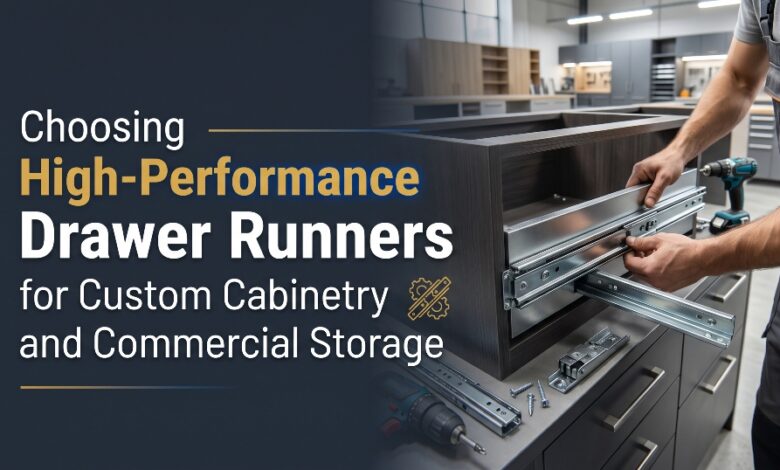
Crafting exceptional cabinetry or outfitting heavy-duty commercial storage requires more than visually appealing exteriors and sturdy timber or sheet metal boxes; it demands precision-engineered mechanical motion underneath. The true measure of quality in any storage unit reveals itself the moment someone pulls a handle and experiences the glide, balance, and structural rigidity of the internal hardware. When linear motion components are carefully matched to their intended workload and environment, everyday access becomes effortless, quiet, and dependable for decades.
Selecting the right hardware is an exciting opportunity to elevate both user comfort and long-term durability across residential kitchens, boutique retail displays, medical laboratories, and industrial workshops. By understanding how material metallurgy, extension travel, mounting geometry, and locking mechanisms interact, builders and engineers can eliminate sagging drawers, jerky movement, and premature wear. Every detail—from ball-bearing raceway precision to corrosion-resistant surface finishes—contributes to a superior tactile experience that users immediately notice and appreciate.
Drawer Runners manufactured by Truslide exemplify how precision linear motion engineering transforms ordinary storage compartments into high-efficiency, smooth-gliding systems built for demanding residential and commercial environments. Rather than treating slide hardware as an afterthought, modern cabinetmakers and industrial designers prioritize high-load stability, whisper-quiet travel, and seamless integration right from the initial blueprint stage. Investing in proven linear hardware ensures that heavily loaded pantry pull-outs, dense tool chests, and delicate instrumentation trays operate with identical grace and zero structural deflection.
Core Material Options for Diverse Environments
Choosing the right base metal is the foundation of reliable drawer performance, because each alloy offers distinct advantages in strength-to-weight ratio, environmental resilience, and cost efficiency. Matching the metal composition to the surrounding climate and operational stress ensures decades of trouble-free service:
- Cold-Rolled Steel: Renowned for exceptional structural rigidity and cost-effectiveness, cold-rolled steel is the backbone of custom furniture, office pedestals, and standard commercial cabinetry. When treated with protective zinc or electroplated coatings, it delivers smooth ball-bearing travel and impressive load support for everyday storage.
- SUS304 Stainless Steel: Engineered for harsh, humid, or sterile environments, austenitic stainless steel resists rust, chemical exposure, and extreme temperatures. It is the premier choice for commercial kitchens, pharmaceutical cleanrooms, marine vessels, outdoor cabinetry, and high-temperature industrial ovens.
- Aluminum Alloy: Combining lightweight agility with remarkably high load-bearing capability, anodized aluminum rails reduce overall cabinet weight without sacrificing strength. Their natural corrosion resistance and sleek silver finish make them ideal for mobile service vehicles, aerospace interiors, and modern architectural millwork.
- Bearing Steel: Designed for high-cycle industrial automation and precision equipment racks, hardened bearing steel minimizes raceway wear under continuous repetitive motion, preserving tight tolerances even after hundreds of thousands of open-and-close cycles.
Drawer Runners from Truslide cover this complete spectrum of cold-rolled steel, aluminum alloy, bearing steel, and stainless steel configurations, giving designers over three hundred specialized specifications to match every conceivable load and spatial requirement. Having access to multiple metallurgical profiles under one cohesive engineering standard allows workshops and commercial contractors to standardize quality across light-duty display cases and extreme-duty industrial enclosures alike.
Key Performance Factors to Evaluate Before Ordering
Before finalizing hardware specifications for a custom cabinetry project or commercial roll-out, evaluating several mechanical criteria will guarantee optimal fit, safety, and ergonomics:
- Dynamic Load Capacity: Always calculate the maximum combined weight of the drawer box and its heaviest anticipated contents, then add a comfortable safety margin. Light-duty rails comfortably manage 25 kg to 45 kg for stationery or apparel, medium-duty options handle 80 kg to 120 kg for commercial files and kitchenware, and heavy-duty industrial profiles support anywhere from 300 kg up to 900 kg for dense machinery parts and battery banks.
- Extension Travel Type: Three-quarter extension slides keep a portion of the drawer inside the cabinet carcass, saving space in tight walkways, whereas full-extension three-stage telescopic slides bring the entire drawer box clear of the cabinet face so users can reach items tucked into the farthest back corners effortlessly.
- Profile Width and Clearance: Space constraints often dictate hardware selection, particularly in slim medical analyzers, server racks, and compact retail fixtures. Narrow-body profiles—some as slim as 13 mm wide—maximize usable interior drawer volume while maintaining impressive vertical load ratings.
- Locking and Retention Mechanisms: In mobile environments such as emergency vehicles, railway interiors, or rolling tool carts, integrated closed-locking and open-locking latches prevent drawers from sliding open during transit or slamming shut while technicians are working.
- Mounting Orientation and Installation Geometry: Side-mounted rails offer straightforward installation and high lateral stability, while specialized inclined or bottom-supported geometries allow angled testing racks and custom display trays to operate smoothly without requiring complex cabinet modifications.
Matching Hardware to Custom Cabinetry Applications
In bespoke residential and luxury commercial interiors, tactile refinement and visual harmony are just as important as raw strength. Custom woodworkers and interior architects look for hardware that complements fine joinery while enhancing daily convenience:
- Gourmet Kitchens and Deep Pantries: Full-extension rails allow homeowners to pull out heavy cast-iron cookware, stand mixers, and bulk dry goods smoothly without straining their backs or rummaging in dark cabinet recesses.
- High-End Retail and Museum Display Cases: Precision linear rails provide effortless, vibration-free access for staff arranging jewelry, electronics, or artifacts while maintaining clean, unobtrusive sightlines inside glass enclosures.
- Architectural Office Built-Ins: Quiet, smooth-gliding rails keep lateral file drawers and media consoles operating silently in executive suites, libraries, and collaborative workspaces.
- Appliance Integration and White Goods: Heat-tolerant and moisture-resistant tracks enable integrated refrigeration drawers, warming compartments, and utility pull-outs to blend seamlessly into custom millwork panels.
Engineering Heavy-Duty Commercial and Industrial Storage
Commercial and industrial environments subject storage hardware to intense mechanical stress, frequent cycling, and challenging ambient conditions. Selecting purpose-built linear motion components prevents costly downtime and protects valuable equipment:
- Server Racks and Data Enclosures: Heavy-duty telescopic rails allow IT technicians to slide dense servers and power distribution units completely out of standard racks for rapid maintenance and cable management without disconnecting power.
- Medical and Laboratory Equipment: Clean, non-corrosive stainless steel slides support sensitive diagnostic instruments, sample trays, and mobile medical carts where hygienic surfaces and smooth, jerk-free positioning are critical.
- Automotive and Service Fleet Upfitting: High-load aluminum and steel runners keep heavy diagnostic tools, spare components, and generator modules securely locked in transit yet instantly accessible on the job site.
- Automated Machinery and Test Cabinets: Precision-ground rails and inclined mounting solutions ensure repeatable alignment in industrial testing stations, robotic tool changers, and assembly line workstations.
Installation Best Practices for Long-Term Precision
Even the finest precision-engineered hardware relies on accurate installation to deliver its full rated lifespan and silky-smooth travel. Following disciplined workshop practices ensures consistent results across every drawer bank:
- Verify Cabinet Squareness: Measure diagonals across the cabinet opening before mounting any hardware to confirm that side walls are parallel and plumb, preventing binding along the raceway.
- Maintain Exact Side Clearance: Leave the exact manufacturer-specified gap between the drawer box sides and the interior cabinet walls so ball bearings roll freely without lateral pinching.
- Use Precision Drilling Jigs: Align mounting holes with dedicated templates and drive screws squarely into solid structural framing or reinforced mounting brackets, especially when supporting loads above 100 kg.
- Test Full Travel Under Load: Cycle each installed drawer through its complete extension and retraction stroke before final sign-off to verify smooth engagement of any disconnect levers or locking tabs.
With nearly two decades of specialized manufacturing experience and strict full-process quality inspections, Truslide empowers cabinetmakers, equipment builders, and commercial contractors to build storage systems that perform reliably under every workload. When you pair thoughtful cabinet design with precision-crafted linear hardware, every pull feels balanced, quiet, and effortlessly controlled for years to come.
Learn more about their linear motion expertise and engineering heritage at https://www.truslider.com/about-us/.